What Color Are My Eyes? The Full Eye Color Guide
If you have ever asked what color are my eyes, this guide is for you. I will walk you through how eye color works in plain words. You will learn how to read your own iris, how to tell a true color from a trick of the light, and how to find your exact shade from a photo. By the end you will know your eye color with no doubt. No big words, no hard steps, just clear help from me to you.
What Is Eye Color?
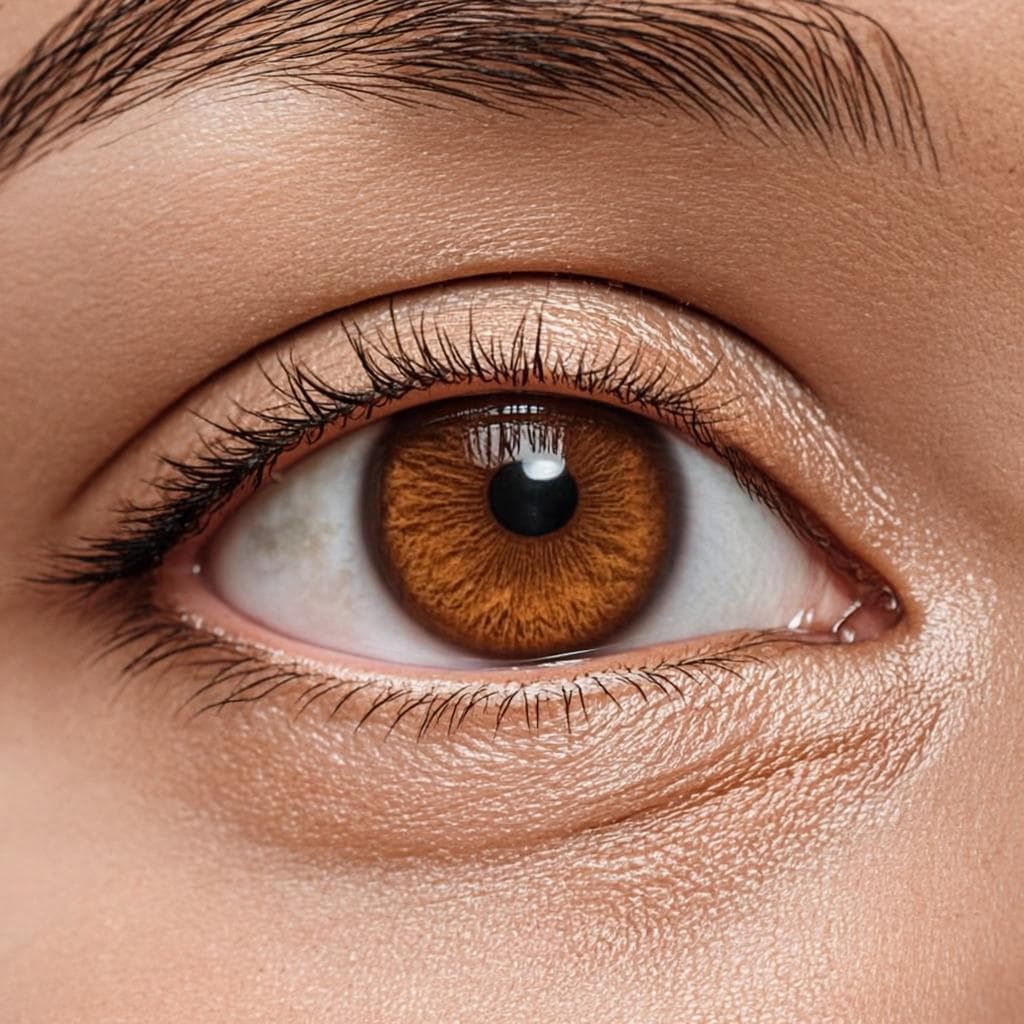
Eye color is the look of your iris, the ring part of your eye around the black dot in the middle. The color comes from a thing called pigment, also named melanin. The more pigment you have, the darker your eyes look. The less pigment you have, the lighter your eyes look.
So if your eyes are brown, you have a lot of pigment. If your eyes are blue, you have very little. If your eyes are green or hazel, you are in the middle, and the light does some tricks too.
- Brown eyes: lots of pigment.
- Hazel eyes: a mix of pigment and light tricks.
- Green eyes: low pigment plus light scatter.
- Blue eyes: very low pigment.
- Gray eyes: very low pigment with more collagen.
Why People Ask What Color Are My Eyes
A lot of people ask this. I get it. Eye color can look like one shade in the sun and a new shade in the shade. Some eyes look green in day light and gray at night. Some look brown in a room and gold out in the sun.
You may ask this when you fill a form, pick glasses, choose a hair tone, or just look in the mirror and feel lost. A photo eye test can help you name the shade fast.
How To Find Your True Eye Color
To find your true eye color you need good light, a clear photo, and a calm place to look. Do not stand in harsh sun. Do not stand in a dark room. The best light is soft day light near a window.
Here is what we do. Face a window with soft day light. Take a clear photo of the eyes with no flash. Look at the photo on a phone and zoom in. Then match the color to a chart.
- Stand near a window with soft day light.
- Take a clear photo of your eye with no flash.
- Zoom in to see the true shade.
- Match it to an eye color chart.
- Or use an AI eye color scanner for the exact shade.
Eye Color Chart: All The Main Shades
An eye color chart shows the main shades of eyes in a row. You can look at the chart and find the one that looks most like yours. The chart goes from dark to light.
| Shade | Color | How Rare |
|---|---|---|
| Dark Brown | deep brown near black | most common |
| Brown | rich warm brown | very common |
| Light Brown | soft gold brown | less common |
| Hazel | mix of brown, gold, green | rare |
| Amber | gold or copper | rare |
| Green | soft green | very rare |
| Blue | sky to deep blue | less common |
| Gray | pale cool gray | very rare |
| Violet | soft violet | most rare |
Can Your Eye Color Change?
Eye color can change a bit. Most change happens when you are a baby. A baby born with blue eyes can grow up to have brown eyes. This happens as pigment builds up.
When you are older, your eye color stays the same most of the time. But it can look a bit different in different light. Some meds and some illnesses can also change eye color. If your eyes change a lot fast, see an eye doc.
How AI Helps You Find Your Eye Color
An AI eye color scanner can read your photo and tell you the exact shade. It looks at the iris, the pupil, and the rings in your eye. It can also give you your undertone, how rare your color is, and the look of your iris.
Our tool does all of this. You upload a photo, agree to the rules, and we show you the full report in a few seconds. We do not keep your photo. We delete it right after.
Common Mistakes When You Read Your Eye Color
People make a few slips when they name their eye color. The top one is the light. If you look in a yellow bulb, your eyes will look warm. If you look in a blue light, your eyes will look cool. So always use soft day light.
The next slip is a small photo. If the photo is too small, you can not see the true shade. Take a close photo with no flash.
The last slip is the pupil. The black dot in the middle is not your eye color. Look at the ring around it.
- Do not read eye color in a dark room.
- Do not read eye color in harsh sun.
- Do not use a photo with flash.
- Do not name your color from far away.
- Do not look at the pupil, look at the iris ring.
How To Tell If Your Eyes Are Hazel Or Green
This is a top question. Hazel and green eyes can look the same. The way I tell them apart is the mix. Hazel eyes have brown or gold near the pupil and green or gray at the edge. Green eyes look green all over, with maybe a tiny bit of brown near the pupil.
If your eyes look like a sun set, gold and brown and green all in one, they are hazel. If they look more like a soft green field, they are green.
Why Your Eye Color Is Not Just One Shade
Your iris is not one flat color. It has rings, flecks, and tiny lines. Some parts are dark and some are light. That is why your eyes can look like two colors at the same time.
When you read your eye color, name the main shade first. Then note the flecks. This gives you the true picture of your iris.
The Limbal Ring
The limbal ring is the dark ring at the edge of your iris. A dark ring can make your eyes look more bright. As we get old, this ring can fade.
Flecks And Crypts
Flecks are tiny dots of color in the iris. Crypts are tiny pits. Both give your eye a rich, full look. No two irises have the same fleck pattern, just like a fingerprint.
What To Do Next
Now you know how eye color works. The next step is to find your true shade. You can use our free AI eye color scanner. Just upload a clear photo and we will do the rest.
You can also read the rest of our guide. We have a full chart, a deep look at each color, and a look at how your genes play a part.
Key takeaways
- Eye color comes from the pigment named melanin in your iris.
- Brown eyes have the most pigment, blue eyes have the least.
- Use soft day light to read your true eye color.
- An AI scanner can give you your exact shade in seconds.
- Your iris is a mix of rings, flecks and tiny pits, not one flat color.
FAQ
Can eye color change as I grow old?
A bit. Most change is when you are a baby. Grown ups can see a small shift in different light, but the true color stays the same.
Is my eye color the same as my parents?
Not always. Eye color comes from genes. Two blue eyed parents can have a brown eyed child, though it is rare.
What is the most rare eye color?
True violet and gray are the most rare. Green is also rare. Brown is the most common eye color in the world.
Can I trust an AI eye color scanner?
Yes, if the photo is clear and the light is good. AI looks at the iris pixel by pixel and is more exact than the eye alone.
Find your true eye color now
Upload a clear photo, agree to the rules, and our AI scanner gives you the exact shade plus a full report in seconds.
Take the free eye color test